310.230.8282

Root Canal Therapy
A root canal treatment is needed when the soft tissue inside the root of a tooth, known as the pulp, experiences inflammation or infection. Inflammation or infection can occur as a result of several things, including severe decay that burrows into the deeper reaches of a tooth, repeated dental procedures or the presence of a chip or crack. A trauma or injury to a tooth may result in pulpal damage that is not visible to the naked eye. However, if the tooth remains untreated, pain or sensitivity may occur and an abscess could develop.
Symptoms
Symptoms you may experience prior to needing root canal therapy include persistent sensitivity to heat or cold and tooth discoloration. The tooth may also be sensitive to chewing and touch. Other warning signs include inflammation, drainage and sensitivity in the lymph nodes, nearby bone and gum tissues. However, sometimes you may not experience any symptoms but still be in need of endodontic treatment.
Treatment
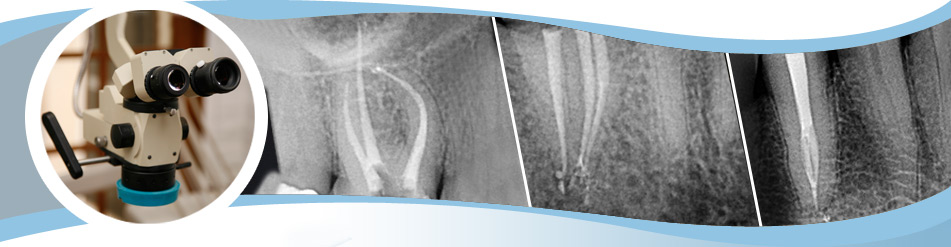
Under a microscope, we will extract the inflamed or infected pulp, and then thoroughly cleanse and carefully reshape the canal. Afterwards the channel is filled and sealed with a temporary filling material. Within two to five weeks, you will need to see your general dentist for a permanent restoration (filling or crown) of the tooth. This will protect the tooth and restore it to its proper function.
Procedure
- We will use local anesthesia in your tooth area.
- A dental rubber dam will be placed to isolate your tooth.
- Your tooth will be opened to allow access for the removal of infected or necrotic dental pulp.
- Under the microscope the canals are thoroughly cleaned.
- With specialized instruments your doctor will shape your canals.
- The roots are filled again will biocompatible filling material.
- A temporary filling will be placed over the access opening to protect your roots from being exposed or contaminated until you return to your general dentist for your final restoration.
We advise you return to your general dentist between two to five weeks after your root canal therapy is completed to have your final restoration. A common misconception is that a root canal is an uncomfortable procedure. Actually, root canals are similar to having a cavity filled, producing minimal discomfort